




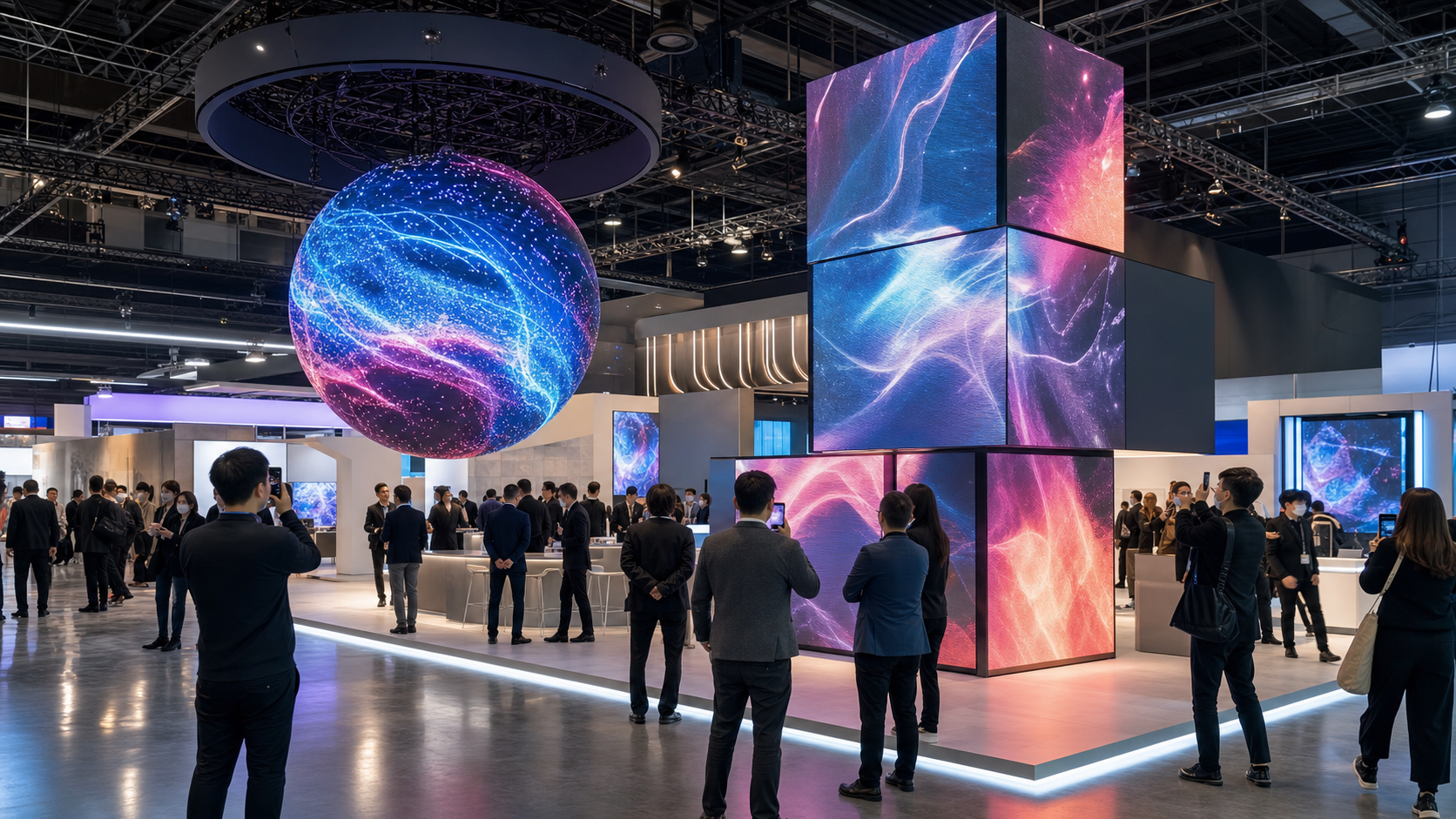
If you are sourcing a rental LED display for events in 2026, the buying logic is changing. Buyers in the US and Europe are no longer comparing LED walls by image quality alone. They still care about brightness, pixel pitch, and screen size, but they now pay much more attention to setup speed, cabinet structure, service access, camera performance, and whether the system fits real event workflows.
A rental LED display for events is a modular LED video wall built for temporary installation at trade shows, weddings, DJ stages, corporate events, festivals, and branded activations. The best systems are not only visually strong. They are also faster to install, easier to maintain, more reliable for repeated use, and flexible enough to support different venues and screen layouts.
This matters because many event buyers are under pressure to do more with tighter schedules. Labor costs are high. Venue access windows are short. More projects are filmed for social media, live streaming, or recap content. As a result, the most competitive rental LED solutions are the ones that perform well both on site and on camera.
Quick answer: A rental LED display for events is a modular LED video wall designed for temporary installation at trade shows, weddings, DJ stages, corporate events and festivals. Buyers should compare pixel pitch, brightness, refresh rate, cabinet weight, installation speed and maintenance method before choosing a supplier.
What Is a Rental LED Display for Events?
A rental LED display for events is a temporary LED screen system made from modular cabinets that can be assembled, disassembled, transported, and reused across multiple event projects. Unlike fixed installation LED walls, rental systems are designed for repeat deployment. They need to balance image quality with speed, durability, and ease of handling.
These systems are widely used for trade show booths, conference stages, product launches, weddings, DJ performances, concerts, festivals, and branded photo areas. In most cases, a rental LED system is selected not only by screen size and pixel pitch, but also by how quickly it can be built, how safely it can be transported, and how easily it can be serviced if something goes wrong during a live event.
This is why many buyers now ask more detailed questions. They want to know if the cabinets are lightweight, whether front or rear maintenance is available, if the system supports curved structures, if it performs well on camera, and how well it adapts to different event layouts.
Why Setup Speed Matters More in 2026
Setup speed has become one of the clearest buying priorities in event LED. In earlier years, some buyers were willing to accept slower setup if the display quality was good enough. In 2026, that trade-off is much less attractive.
There are four main reasons for this shift. First, venue schedules are tighter. Event teams often have limited access windows for load-in and load-out. A system that installs faster gives them more control and more margin for unexpected changes. Second, labor costs are higher. Faster setup reduces crew hours and improves project efficiency. Third, more buyers want flexible reuse. A screen that can move easily between weddings, conferences, trade shows, and stage shows is more valuable than one that performs well only in a narrow setup type. Fourth, camera performance and setup logic are now closely connected. A camera-friendly LED screen is only useful if the project can actually be built, aligned, tested, and commissioned on time.
- Tool-less or tool-light locking
- Lightweight cabinets
- Quick maintenance access
- Stable touring structures
- Clean cable planning
- Fast curve adjustment
For your independent site, this section should make it clear that setup speed is not a convenience feature. It is a business result. Faster setup helps buyers reduce labor pressure, lower installation risk, and complete more projects more efficiently.
Key Specs Buyers Compare Before Ordering
Pixel Pitch and Viewing Distance
Pixel pitch determines how detailed the image appears at a given distance. For close-viewing indoor events, finer pixel pitches such as P1.9, P2.6, or P2.9 are often preferred. For larger spaces or longer viewing distances, options such as P3.91 may provide a better balance between cost and visual quality.
A good supplier should not recommend pixel pitch in isolation. The right choice depends on viewing distance, screen size, event type, budget, and whether the screen will be filmed.
Brightness for Indoor and Outdoor Use
Indoor and outdoor rental LED displays serve different conditions. Indoor projects usually focus on color, image clarity, and audience comfort. Outdoor projects need stronger brightness, weather resistance, and visibility in changing ambient light.
Refresh Rate for Live Streaming and Cameras
High refresh rate is increasingly important because more events are filmed. Corporate events, weddings, concerts, DJ shows, and branded activations often generate photo, video, or live-streaming content. A camera-friendly LED wall helps reduce flicker and improves the final visual result.
Cabinet Weight and Tool-Less Assembly
Cabinet weight affects labor intensity, transport efficiency, and total setup time. Tool-less or low-tool assembly reduces on-site complexity. These two details are now strong buying signals, especially for rental companies managing repeat-use fleets.
Front and Rear Maintenance
Maintenance design affects how practical the system is in real event conditions. Buyers want to know whether they can replace modules, power supplies, or other components without disrupting the whole structure.
Best LED Display Types for Trade Shows, DJ Stages and Weddings
Trade Show LED Walls
Trade show buyers want LED walls that attract attention quickly, fit booth structures cleanly, and support branded storytelling. For this scene, modularity and visual impact matter at the same time. A strong trade show LED wall page should explain screen flexibility, setup speed, front-facing visual impact, booth integration, and optional curved or transparent structures.
LED DJ Booth Packages
An LED DJ booth should be positioned as part of a stage visual package, not just a decorative front panel. The strongest setup often includes a front-facing LED DJ booth, a synchronized rear LED wall, optional LED floor integration, and motion-driven content for live performance energy.
Wedding Photo Backdrop LED Walls
Wedding buyers often want a polished screen that can work as a stage backdrop, a visual focal point, or a photo-zone background. In this case, elegance, image smoothness, and ease of setup matter more than extreme technical complexity. Better expressions include LED backdrop for wedding photo area, wedding stage LED wall, and LED wall for branded photo activation.
Creative LED Options: Floor, Cube, Sphere and LED Backdrop
LED Floor Display for Immersive Entry Paths
LED floor screens are ideal for trade show entrances, brand launch walkways, wedding aisles, and interactive stage zones. Their strongest selling points include visual impact, anti-slip structure, load-bearing strength, content synchronization, and immersive movement through space.
Cube and Sphere LED Displays for Branding
Cube and sphere LED displays are powerful when a project needs a compact but memorable centerpiece. These formats are especially useful for exhibition halls, shopping mall atriums, branded photo zones, launch entrances, and immersive retail activations. Their value comes from visibility, novelty, and stronger memory value.
LED Backdrop for Event Photo Areas
LED backdrops are useful when buyers want branded animation, real-time visual loops, or premium event staging behind a photo area. This category works best when tied directly to LED display use, not general photo booth language.
How to Choose an Event LED Display Supplier
Product Fit
- Is the recommended pixel pitch suitable for the viewing distance?
- Is the system optimized for rental use rather than fixed installation?
- Can the supplier support creative structures if the project expands?
Installation Support
- Are installation drawings or structure suggestions available?
- Can the team support stack, fly, wall-mount, or custom formats?
- Is remote commissioning support possible?
Service and Spare Parts
- What spare parts ratio is recommended?
- How are modules and power components handled for overseas support?
- What after-sales support can buyers expect during live deployment?