







Choosing an LED screen for your business should start with the business goal, not with a random product model. A retail store, church, hotel, showroom, school, corporate lobby, event company and outdoor advertising project all need different screen sizes, pixel pitches, brightness levels, installation methods and maintenance plans.
Therefore, the best LED screen is not always the most expensive one. It is the screen that fits your viewing distance, content type, operating environment and long-term service needs. In this ZHIYU buyer guide, we explain how to choose an LED screen for your business before you request a quote or place an order.
CTA: Need help choosing the right LED screen? Send ZHIYU your business type, screen size, viewing distance, indoor or outdoor environment and installation method. Our team can recommend the suitable pixel pitch, cabinet type, brightness, control system and maintenance plan.
Start With the Business Goal, Not the Screen Model
First, define what the LED screen must achieve for your business. Do you want to attract street traffic, improve the in-store experience, replace a projector, create a premium lobby, support worship, sell advertising space or run live event content?
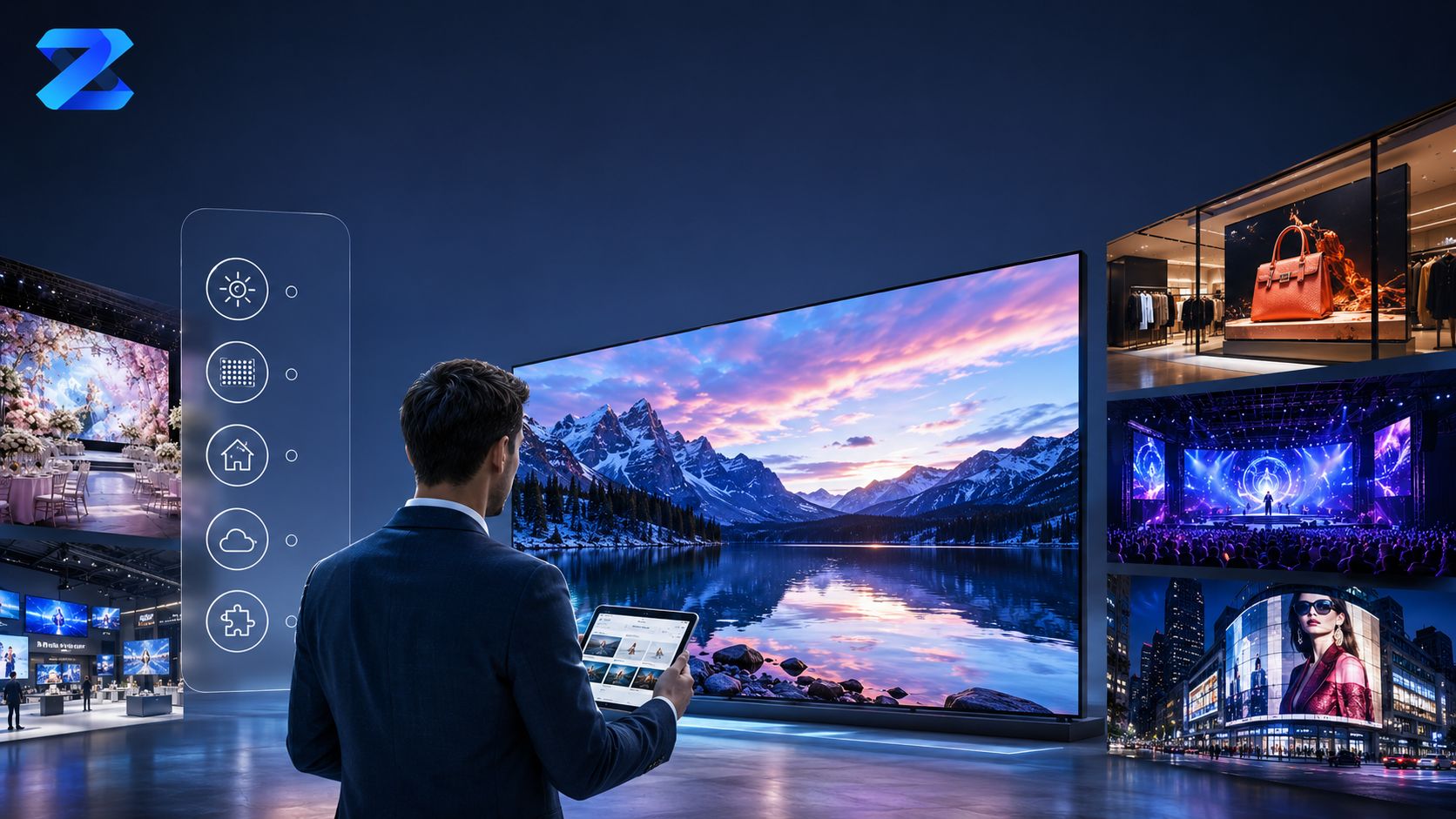
This question matters because the application affects almost every technical decision. For example, a storefront LED display needs strong visibility and reliable content playback. Meanwhile, a meeting room LED video wall needs close-viewing clarity, accurate color and a clean installation. An outdoor advertising screen must handle sunlight, weather and long operating hours.
Image suggestion: Business application matrix comparing retail, corporate, church, hospitality, outdoor advertising and events. Alt text: Commercial LED screen applications for different business environments.
Retail Stores and Shopping Malls
Retail LED screens usually need bright, attractive visuals that help customers notice products, promotions and brand messages. In many stores, the screen sits close to customers, so pixel pitch and viewing distance matter. Also, the content often includes product photos, short videos, pricing messages or seasonal campaigns.
For this reason, retail buyers should consider indoor LED walls, window-facing LED displays or creative LED shapes depending on the store layout. A clean installation and easy content updates can matter as much as the screen itself.
Corporate Lobbies, Meeting Rooms and Showrooms
Corporate spaces usually need a more refined LED display. A lobby screen may present brand videos and visitor information, while a meeting room may show presentations, data dashboards and video calls. As a result, the image should look sharp from a close distance.
In these environments, businesses often choose fine-pitch LED screens, front-service cabinets and a control system that works smoothly with laptops, media players or conference systems. A quiet, clean and serviceable design also helps protect the room experience.
Churches, Schools and Public Venues
Churches, schools and public venues often need reliable visibility for large audiences. The LED screen may show lyrics, announcements, live camera feeds, presentations or event schedules. Therefore, buyers should match pixel pitch with the farthest and closest viewing positions in the room.
Also, these spaces may need simple operation. If volunteers or non-technical staff operate the display, the control system and content workflow should stay easy to manage.
Outdoor Advertising, Storefronts and Building Facades
Outdoor LED screens need a different set of priorities. They must stay visible in bright ambient light, handle weather conditions and support safe installation. In addition, outdoor projects may require stronger steel structure planning, power distribution, ventilation and local installation coordination.
Because of that, outdoor LED screen buyers should not compare only cabinet price. They should also review brightness, weather protection, IP rating, viewing angle, service access and long-term maintenance support.
Choose the Right LED Screen Environment
Next, decide whether the display will be indoor, outdoor, semi-outdoor or window-facing. This decision affects brightness, cabinet structure, waterproof design, cooling, installation method and maintenance access.
Indoor LED Screen
An indoor LED screen works best in controlled environments such as retail stores, offices, showrooms, churches, schools, hotels and control rooms. Since indoor viewers often stand closer to the screen, buyers usually need a smaller pixel pitch than they would use outdoors.
However, indoor projects do not always need maximum brightness. Instead, they need comfortable viewing, good color, stable refresh rate and the right cabinet depth for the wall or structure.
Outdoor LED Screen
An outdoor LED screen must stay visible under stronger ambient light. It also needs protection from rain, dust, temperature changes and long operating hours. For this reason, outdoor buyers should ask about brightness, weather-ready cabinet design, IP protection, heat management and safe service access.
Also, outdoor displays often use a larger pixel pitch because viewers usually stand farther away. This can help control cost while still delivering strong visibility at the intended distance.
Semi-Outdoor or Window-Facing LED Screen
A semi-outdoor or window-facing LED screen sits in a special environment. It may be installed indoors but face strong sunlight through glass. Therefore, it may need higher brightness than a normal indoor LED wall, even if it does not need the same weather protection as a fully outdoor screen.
Before choosing this type of LED display, tell ZHIYU whether the screen faces direct sunlight, how far viewers stand, and whether the screen sits behind glass. These details help the team recommend a practical brightness and pixel pitch.
Image suggestion: Split image showing indoor fine-pitch LED wall and outdoor high-brightness weather-ready LED display. Alt text: Indoor vs outdoor LED screen selection for business use.
CTA: Ask ZHIYU to match the screen to your environment. Share whether your screen is indoor, outdoor, semi-outdoor or window-facing, and we will help you choose brightness, cabinet design and maintenance access.
Match Pixel Pitch With Viewing Distance
Pixel pitch is one of the most important decisions when choosing an LED screen. It describes the distance between adjacent LED pixels. In general, a smaller pixel pitch provides higher pixel density and better clarity at closer viewing distances.
However, smaller pixel pitch also increases cost because the same screen area contains more pixels and more LED components. Therefore, your business should not choose the smallest pitch automatically. Instead, match pixel pitch with the actual distance between the screen and the closest viewers.
For example, a corporate meeting room, control room or luxury showroom may need fine pitch because viewers sit close to the screen. In contrast, an outdoor sign or event backdrop can often use a larger pitch because viewers stand farther away.
Image suggestion: P1.25, P1.86, P2.5, P3.91 and P6 pixel pitch comparison with close, medium and long viewing distance. Alt text: LED screen pixel pitch and viewing distance comparison for business displays.
| Business Situation | Typical Viewing Pattern | Selection Direction |
|---|---|---|
| Meeting room or control room | Close viewing, detailed content | Fine-pitch indoor LED screen |
| Retail store or showroom | Close to medium viewing | Indoor LED wall or creative LED display |
| Church, school or auditorium | Medium to long viewing | Balanced pixel pitch with strong readability |
| Outdoor billboard or facade | Long-distance viewing | Outdoor LED display with suitable brightness |
| Event or stage rental | Variable viewing distance | Rental LED screen with fast assembly |
CTA: Unsure about pixel pitch? Send ZHIYU your closest viewing distance and screen size. We can recommend a practical pixel pitch instead of pushing the most expensive option.
Choose the Right LED Screen Type for Your Business
After you define the goal, environment and viewing distance, you can choose the right LED screen type. Different screen types serve different business needs, so the best choice depends on how and where the display will operate.
Indoor Fixed LED Video Wall
An indoor fixed LED video wall suits retail stores, lobbies, showrooms, meeting rooms, churches and control rooms. It provides a seamless large-format display without LCD bezels. Also, it can scale to many sizes and aspect ratios.
For this type of project, buyers should focus on pixel pitch, color consistency, refresh rate, cabinet thickness, front service and content source compatibility.
Outdoor Fixed LED Display
An outdoor fixed LED display works for billboards, building facades, roadside advertising, stadiums and exterior brand signage. It needs strong brightness, weather-ready cabinets, proper structural support and safe service access.
In addition, outdoor buyers should plan power, data cables, ventilation and local installation conditions early. These details can affect both project cost and long-term reliability.
Rental LED Screen for Events
A rental LED screen supports concerts, conferences, exhibitions, weddings, corporate events and temporary promotions. It should assemble quickly, travel safely and handle repeated setup. Therefore, cabinet weight, locking system, corner protection and service speed matter.
Rental buyers should also consider whether they need indoor rental, outdoor rental, curved configurations, floor support or hanging support.
Creative LED Display
A creative LED display can help a business stand out. Examples include cube LED displays, spherical LED screens, floor LED displays, DJ booth LED displays, photo booth LED backgrounds and custom-shaped LED installations.
However, creative projects need stronger planning. Before production, buyers should confirm the shape, viewing angle, installation structure, content format and maintenance method.
Check Installation, Service Access and Maintenance
Installation affects the buying decision as much as the LED screen itself. A wall-mounted indoor screen, hanging rental screen, floor-standing display and outdoor steel-structure screen all require different preparation.
Before ordering, confirm the wall condition, available space, power supply, signal routing, service access and local labor arrangement. Also, decide whether front service or rear service makes more sense. Front-service LED cabinets help when there is no maintenance space behind the screen, while rear-service cabinets can work well when a service corridor or back access exists.
Maintenance planning also protects long-term performance. Your project should include spare LED modules, spare power supplies, receiving cards, basic tools and clear support channels. As a result, your team can respond faster if a module, cable or power component needs replacement.
Image suggestion: Technician checking front-service LED cabinets, cables, power supplies and modules. Alt text: LED screen installation and maintenance access by ZHIYU.
CTA: Plan installation before production. Send ZHIYU photos, drawings or dimensions of the installation area. We can help check cabinet layout, service direction and basic installation preparation.
Compare Image Performance Specifications That Matter
Many buyers focus only on pixel pitch, but a good business LED display also depends on several image performance specifications. These details affect how the screen looks in daily operation.
Brightness should fit the environment. Indoor spaces need comfortable brightness, while outdoor and window-facing projects need stronger visibility. In addition, a suitable refresh rate helps video content and camera shooting look smoother. Good grayscale and color calibration help the screen show gradients, skin tones and brand colors more naturally.
Viewing angle also matters when people approach the display from different directions. For example, shopping malls, churches and event venues often need wide viewing angles because the audience does not stand in one fixed position.
Finally, the control system should match your content source. A simple advertising screen, a meeting room display, a live event wall and a control-room dashboard may all need different processors, media players or signal inputs.
Choose a Reliable LED Screen Supplier
A reliable LED screen supplier should do more than offer a low price. The supplier should ask about your business goal, screen size, viewing distance, environment, installation method and content needs before recommending a model.
Also, the quotation should clearly list pixel pitch, cabinet size, brightness, refresh rate, service method, control system, spare parts, packaging, shipping terms and warranty support. If a quote does not include these details, buyers may struggle to compare suppliers fairly.
ZHIYU supports business LED screen projects with product recommendation, configuration planning, installation guidance, content-input discussion and after-sales support. Therefore, you can compare the complete project solution instead of comparing only a cabinet price.
LED Screen Buying Checklist Before You Request a Quote
Before you request a quote, collect the key project information. This will help ZHIYU recommend the right LED screen faster and reduce back-and-forth communication.
Image suggestion: Clean checklist graphic showing screen size, indoor/outdoor, viewing distance, pixel pitch, installation method, control system and destination. Alt text: LED screen quotation checklist before ordering from ZHIYU.
- Business type and application
- Indoor, outdoor, semi-outdoor or window-facing environment
- Screen width and height, or available installation area
- Closest and typical viewing distance
- Wall-mounted, hanging, floor-standing, truss-mounted or steel-structure installation
- Preferred front service or rear service
- Content type, such as video, ads, presentations, text, live camera or dashboard
- Input source, such as laptop, media player, camera, processor or CMS
- Destination country and shipping requirements
- Timeline, budget range and after-sales expectations
CTA: Send this checklist to ZHIYU for a project-based quote. With the right information, we can recommend a practical LED screen solution for your business instead of sending a generic price list.
Common Mistakes When Choosing a Business LED Screen
Many buyers make the first mistake by choosing only the lowest price. A low price can become expensive later if the screen has weak brightness, poor service access, unstable control, limited spare parts or unsuitable pixel pitch.
Another common mistake is choosing the smallest pixel pitch without considering viewing distance. Although fine pitch can look excellent, it may add cost without clear value if viewers stand far away. On the other hand, a pixel pitch that is too large can make close-viewing content look rough.
Some buyers also forget installation and maintenance until the end. However, the screen must fit the building, wall, power supply, service direction and operating team. Therefore, installation planning should start before production, not after the cabinets arrive.
FAQ: How to Choose an LED Screen for Your Business
How do I choose an LED screen for my business?
Start with your business goal, installation environment, screen size, viewing distance, content type and maintenance access. Then choose the right LED screen type, pixel pitch, brightness, cabinet design and control system.
What pixel pitch should I choose for a business LED screen?
Pixel pitch should match viewing distance. Smaller pixel pitch supports closer viewing and higher detail, while larger pixel pitch often works well for long-distance viewing such as outdoor signage or stage backdrops.
Should my business choose an indoor or outdoor LED screen?
Choose an indoor LED screen for controlled indoor spaces such as retail stores, meeting rooms and lobbies. Choose an outdoor LED screen when the display must handle sunlight, weather, dust, temperature changes and outdoor installation conditions.
What information does ZHIYU need to recommend an LED screen?
ZHIYU needs your business application, screen width and height, indoor or outdoor environment, closest viewing distance, installation method, content source, maintenance preference and destination country.
What is the biggest mistake when buying a commercial LED screen?
The biggest mistake is choosing by price or pixel pitch alone. A good LED screen choice should also consider business goal, brightness, installation structure, control system, service access, spare parts and long-term maintenance.
Choose the LED Screen That Fits the Business, Not Just the Budget
Learning how to choose an LED screen for your business helps you avoid mismatched specifications, hidden installation problems and unnecessary spending. First, define the business goal. Next, confirm the environment and viewing distance. Then, choose the right screen type, pixel pitch, installation method and maintenance plan.
ZHIYU helps commercial buyers turn these decisions into a clear LED screen recommendation. Whether you need an indoor LED video wall, outdoor LED display, rental LED screen or creative LED solution, our team can help you compare the right configuration before ordering.
Final CTA: Ready to choose the right LED screen for your business? Contact ZHIYU with your screen size, application, viewing distance and installation environment. We will help you plan a practical LED display solution for your project.
Also, outdoor displays often use a larger pixel pitch because viewers usually stand farther away. This can help control cost while still delivering strong visibility at the intended distance.
Semi-Outdoor or Window-Facing LED Screen
A semi-outdoor or window-facing LED screen sits in a special environment. It may be installed indoors but face strong sunlight through glass. Therefore, it may need higher brightness than a normal indoor LED wall, even if it does not need the same weather protection as a fully outdoor screen.
Before choosing this type of LED display, tell ZHIYU whether the screen faces direct sunlight, how far viewers stand, and whether the screen sits behind glass. These details help the team recommend a practical brightness and pixel pitch.
Image suggestion: Split image showing indoor fine-pitch LED wall and outdoor high-brightness weather-ready LED display. Alt text: Indoor vs outdoor LED screen selection for business use.
CTA: Ask ZHIYU to match the screen to your environment. Share whether your screen is indoor, outdoor, semi-outdoor or window-facing, and we will help you choose brightness, cabinet design and maintenance access.
Match Pixel Pitch With Viewing Distance
Pixel pitch is one of the most important decisions when choosing an LED screen. It describes the distance between adjacent LED pixels. In general, a smaller pixel pitch provides higher pixel density and better clarity at closer viewing distances.
However, smaller pixel pitch also increases cost because the same screen area contains more pixels and more LED components. Therefore, your business should not choose the smallest pitch automatically. Instead, match pixel pitch with the actual distance between the screen and the closest viewers.
For example, a corporate meeting room, control room or luxury showroom may need fine pitch because viewers sit close to the screen. In contrast, an outdoor sign or event backdrop can often use a larger pitch because viewers stand farther away.
Image suggestion: P1.25, P1.86, P2.5, P3.91 and P6 pixel pitch comparison with close, medium and long viewing distance. Alt text: LED screen pixel pitch and viewing distance comparison for business displays.
| Business Situation | Typical Viewing Pattern | Selection Direction |
|---|---|---|
| Meeting room or control room | Close viewing, detailed content | Fine-pitch indoor LED screen |
| Retail store or showroom | Close to medium viewing | Indoor LED wall or creative LED display |
| Church, school or auditorium | Medium to long viewing | Balanced pixel pitch with strong readability |
| Outdoor billboard or facade | Long-distance viewing | Outdoor LED display with suitable brightness |
| Event or stage rental | Variable viewing distance | Rental LED screen with fast assembly |
CTA: Unsure about pixel pitch? Send ZHIYU your closest viewing distance and screen size. We can recommend a practical pixel pitch instead of pushing the most expensive option.
Choose the Right LED Screen Type for Your Business
After you define the goal, environment and viewing distance, you can choose the right LED screen type. Different screen types serve different business needs, so the best choice depends on how and where the display will operate.
Indoor Fixed LED Video Wall
An indoor fixed LED video wall suits retail stores, lobbies, showrooms, meeting rooms, churches and control rooms. It provides a seamless large-format display without LCD bezels. Also, it can scale to many sizes and aspect ratios.
For this type of project, buyers should focus on pixel pitch, color consistency, refresh rate, cabinet thickness, front service and content source compatibility.
Outdoor Fixed LED Display
An outdoor fixed LED display works for billboards, building facades, roadside advertising, stadiums and exterior brand signage. It needs strong brightness, weather-ready cabinets, proper structural support and safe service access.
In addition, outdoor buyers should plan power, data cables, ventilation and local installation conditions early. These details can affect both project cost and long-term reliability.
Rental LED Screen for Events
A rental LED screen supports concerts, conferences, exhibitions, weddings, corporate events and temporary promotions. It should assemble quickly, travel safely and handle repeated setup. Therefore, cabinet weight, locking system, corner protection and service speed matter.
Rental buyers should also consider whether they need indoor rental, outdoor rental, curved configurations, floor support or hanging support.
Creative LED Display
A creative LED display can help a business stand out. Examples include cube LED displays, spherical LED screens, floor LED displays, DJ booth LED displays, photo booth LED backgrounds and custom-shaped LED installations.
However, creative projects need stronger planning. Before production, buyers should confirm the shape, viewing angle, installation structure, content format and maintenance method.
Check Installation, Service Access and Maintenance
Installation affects the buying decision as much as the LED screen itself. A wall-mounted indoor screen, hanging rental screen, floor-standing display and outdoor steel-structure screen all require different preparation.
Before ordering, confirm the wall condition, available space, power supply, signal routing, service access and local labor arrangement. Also, decide whether front service or rear service makes more sense. Front-service LED cabinets help when there is no maintenance space behind the screen, while rear-service cabinets can work well when a service corridor or back access exists.
Maintenance planning also protects long-term performance. Your project should include spare LED modules, spare power supplies, receiving cards, basic tools and clear support channels. As a result, your team can respond faster if a module, cable or power component needs replacement.
Image suggestion: Technician checking front-service LED cabinets, cables, power supplies and modules. Alt text: LED screen installation and maintenance access by ZHIYU.
CTA: Plan installation before production. Send ZHIYU photos, drawings or dimensions of the installation area. We can help check cabinet layout, service direction and basic installation preparation.
Compare Image Performance Specifications That Matter
Many buyers focus only on pixel pitch, but a good business LED display also depends on several image performance specifications. These details affect how the screen looks in daily operation.
Brightness should fit the environment. Indoor spaces need comfortable brightness, while outdoor and window-facing projects need stronger visibility. In addition, a suitable refresh rate helps video content and camera shooting look smoother. Good grayscale and color calibration help the screen show gradients, skin tones and brand colors more naturally.
Viewing angle also matters when people approach the display from different directions. For example, shopping malls, churches and event venues often need wide viewing angles because the audience does not stand in one fixed position.
Finally, the control system should match your content source. A simple advertising screen, a meeting room display, a live event wall and a control-room dashboard may all need different processors, media players or signal inputs.
Choose a Reliable LED Screen Supplier
A reliable LED screen supplier should do more than offer a low price. The supplier should ask about your business goal, screen size, viewing distance, environment, installation method and content needs before recommending a model.
Also, the quotation should clearly list pixel pitch, cabinet size, brightness, refresh rate, service method, control system, spare parts, packaging, shipping terms and warranty support. If a quote does not include these details, buyers may struggle to compare suppliers fairly.
ZHIYU supports business LED screen projects with product recommendation, configuration planning, installation guidance, content-input discussion and after-sales support. Therefore, you can compare the complete project solution instead of comparing only a cabinet price.
LED Screen Buying Checklist Before You Request a Quote
Before you request a quote, collect the key project information. This will help ZHIYU recommend the right LED screen faster and reduce back-and-forth communication.
Image suggestion: Clean checklist graphic showing screen size, indoor/outdoor, viewing distance, pixel pitch, installation method, control system and destination. Alt text: LED screen quotation checklist before ordering from ZHIYU.
- Business type and application
- Indoor, outdoor, semi-outdoor or window-facing environment
- Screen width and height, or available installation area
- Closest and typical viewing distance
- Wall-mounted, hanging, floor-standing, truss-mounted or steel-structure installation
- Preferred front service or rear service
- Content type, such as video, ads, presentations, text, live camera or dashboard
- Input source, such as laptop, media player, camera, processor or CMS
- Destination country and shipping requirements
- Timeline, budget range and after-sales expectations
CTA: Send this checklist to ZHIYU for a project-based quote. With the right information, we can recommend a practical LED screen solution for your business instead of sending a generic price list.
Common Mistakes When Choosing a Business LED Screen
Many buyers make the first mistake by choosing only the lowest price. A low price can become expensive later if the screen has weak brightness, poor service access, unstable control, limited spare parts or unsuitable pixel pitch.
Another common mistake is choosing the smallest pixel pitch without considering viewing distance. Although fine pitch can look excellent, it may add cost without clear value if viewers stand far away. On the other hand, a pixel pitch that is too large can make close-viewing content look rough.
Some buyers also forget installation and maintenance until the end. However, the screen must fit the building, wall, power supply, service direction and operating team. Therefore, installation planning should start before production, not after the cabinets arrive.
FAQ: How to Choose an LED Screen for Your Business
How do I choose an LED screen for my business?
Start with your business goal, installation environment, screen size, viewing distance, content type and maintenance access. Then choose the right LED screen type, pixel pitch, brightness, cabinet design and control system.
What pixel pitch should I choose for a business LED screen?
Pixel pitch should match viewing distance. Smaller pixel pitch supports closer viewing and higher detail, while larger pixel pitch often works well for long-distance viewing such as outdoor signage or stage backdrops.
Should my business choose an indoor or outdoor LED screen?
Choose an indoor LED screen for controlled indoor spaces such as retail stores, meeting rooms and lobbies. Choose an outdoor LED screen when the display must handle sunlight, weather, dust, temperature changes and outdoor installation conditions.
What information does ZHIYU need to recommend an LED screen?
ZHIYU needs your business application, screen width and height, indoor or outdoor environment, closest viewing distance, installation method, content source, maintenance preference and destination country.
What is the biggest mistake when buying a commercial LED screen?
The biggest mistake is choosing by price or pixel pitch alone. A good LED screen choice should also consider business goal, brightness, installation structure, control system, service access, spare parts and long-term maintenance.
Choose the LED Screen That Fits the Business, Not Just the Budget
Learning how to choose an LED screen for your business helps you avoid mismatched specifications, hidden installation problems and unnecessary spending. First, define the business goal. Next, confirm the environment and viewing distance. Then, choose the right screen type, pixel pitch, installation method and maintenance plan.
ZHIYU helps commercial buyers turn these decisions into a clear LED screen recommendation. Whether you need an indoor LED video wall, outdoor LED display, rental LED screen or creative LED solution, our team can help you compare the right configuration before ordering.
Final CTA: Ready to choose the right LED screen for your business? Contact ZHIYU with your screen size, application, viewing distance and installation environment. We will help you plan a practical LED display solution for your project.